Plough Road, Battersea SW11
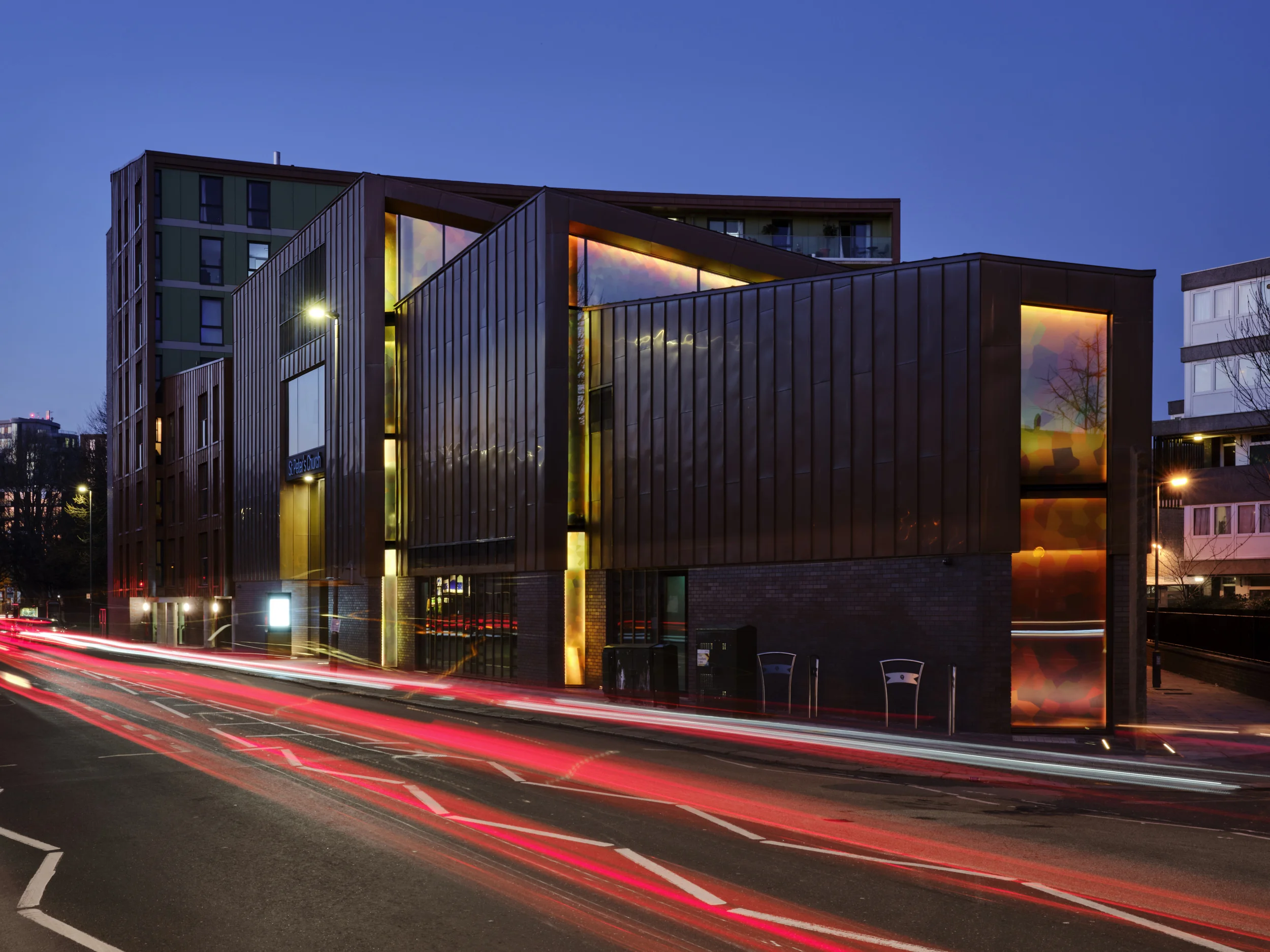
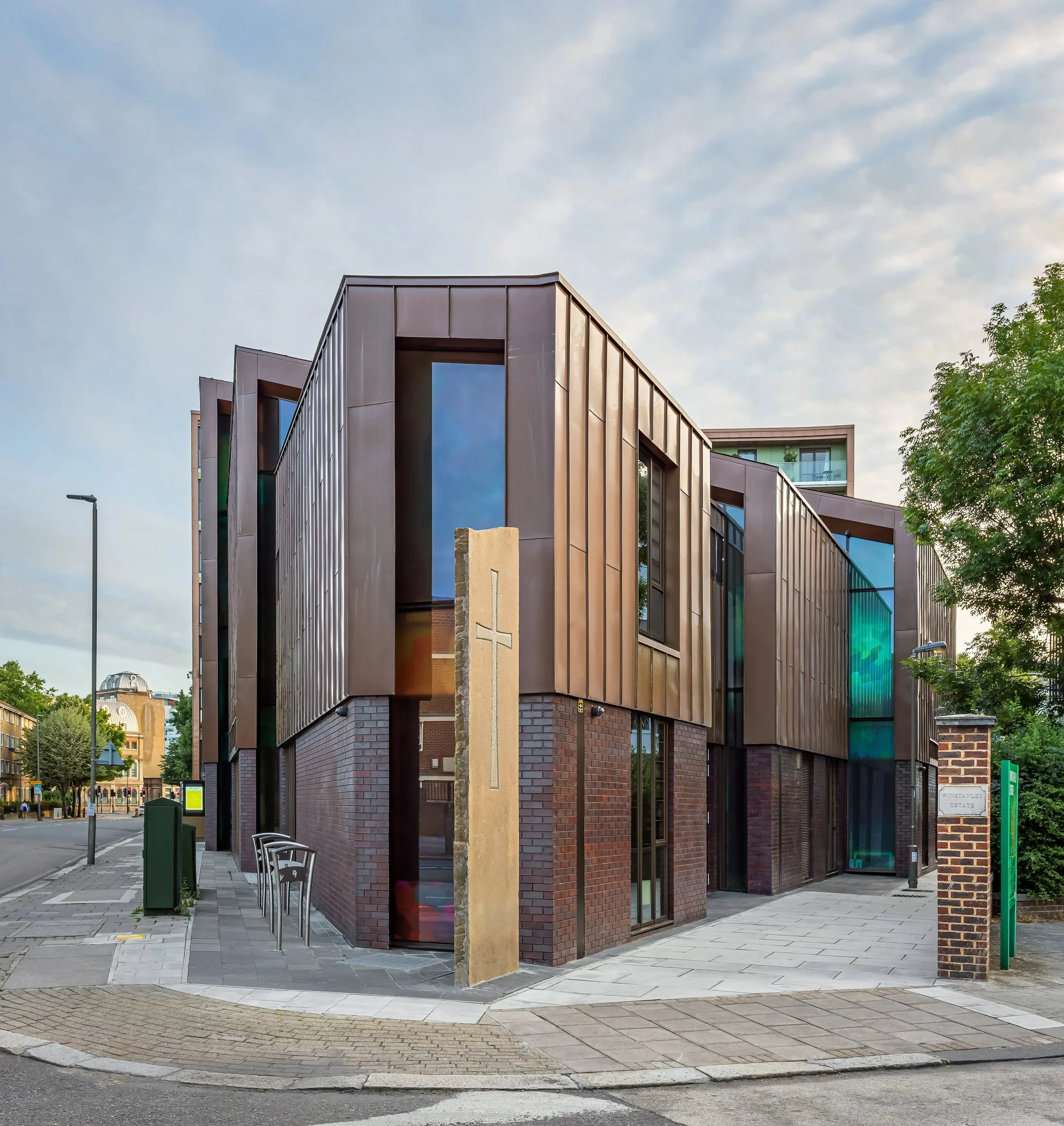
A sucessful collaboration between two firms of architects, this significant brown field regeneration project is about perseverance and determination over a period of 18 years by many local stakeholders. The original St Peter’s Church on Plough Road, Battersea was consecrated in 1876 but was destroyed by fire in 1970.
After the fire, the buildings left on the site comprised a temporary multipurpose church, a community centre and a terrace of unoccupied Victorian residential properties over shops and a small children’s nursery. Also located on the site was a vicarage and the remaining listed church hall.
Critical to the success of redevelopment was St. Peter’s commitment to the community of the Winstanley Housing Estate, an area of significant social deprivation.
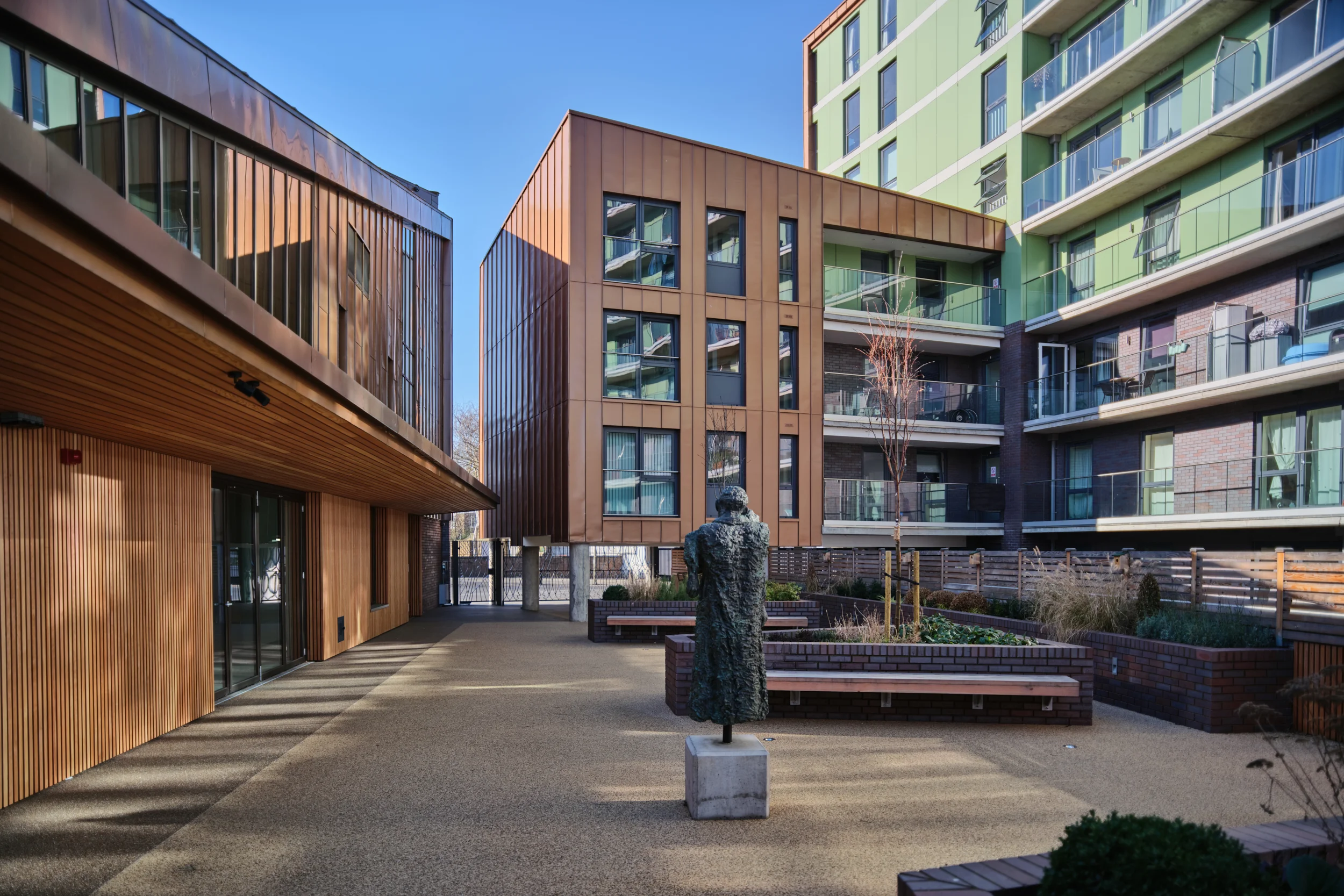
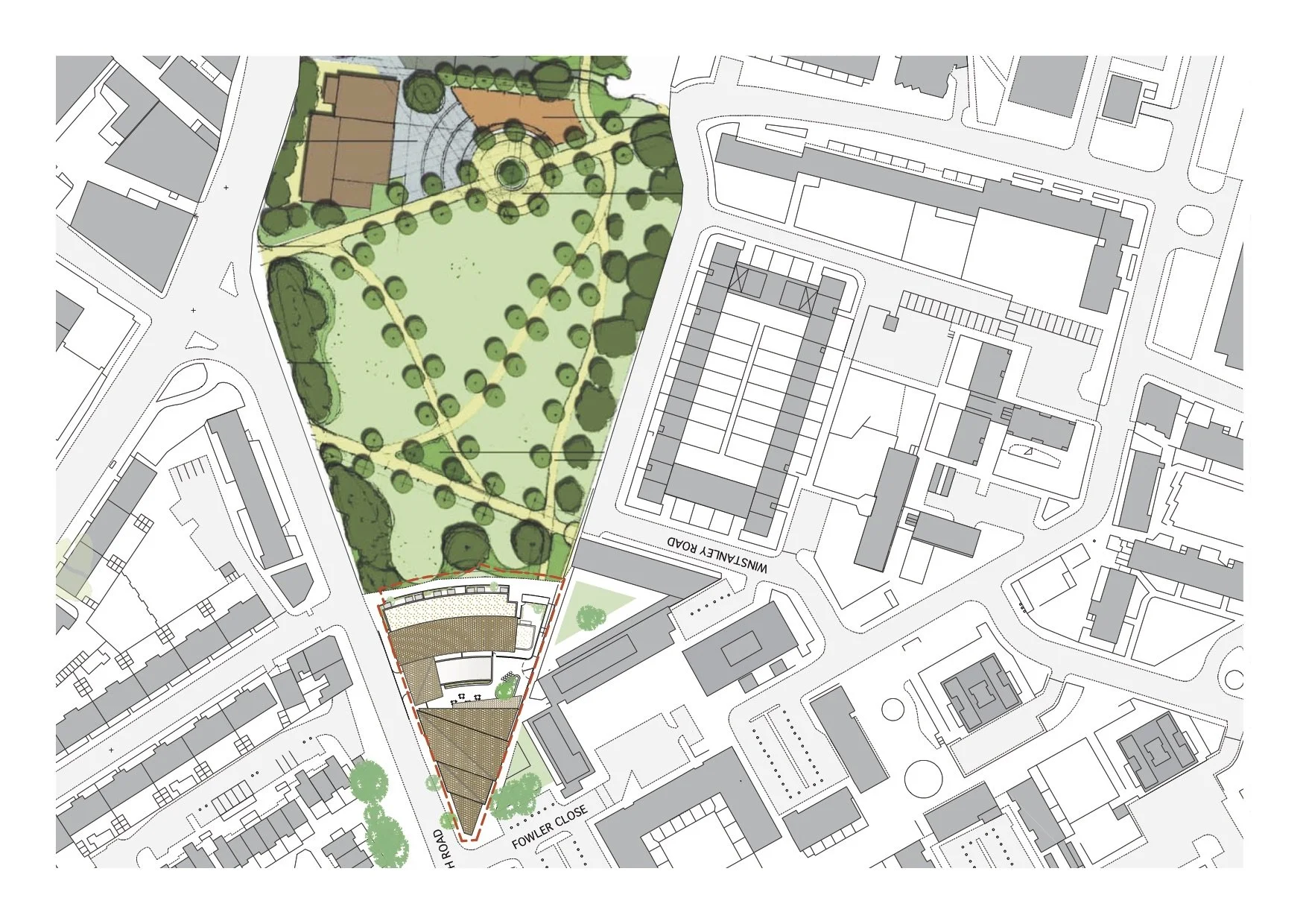
The triangular site presented challenges. The housing comprising 69 flats and a new vicarage occupies the northern end of the site with courtyard separating it from the new church to the south. Planning requirements led to a full basement with 56 parking spaces.
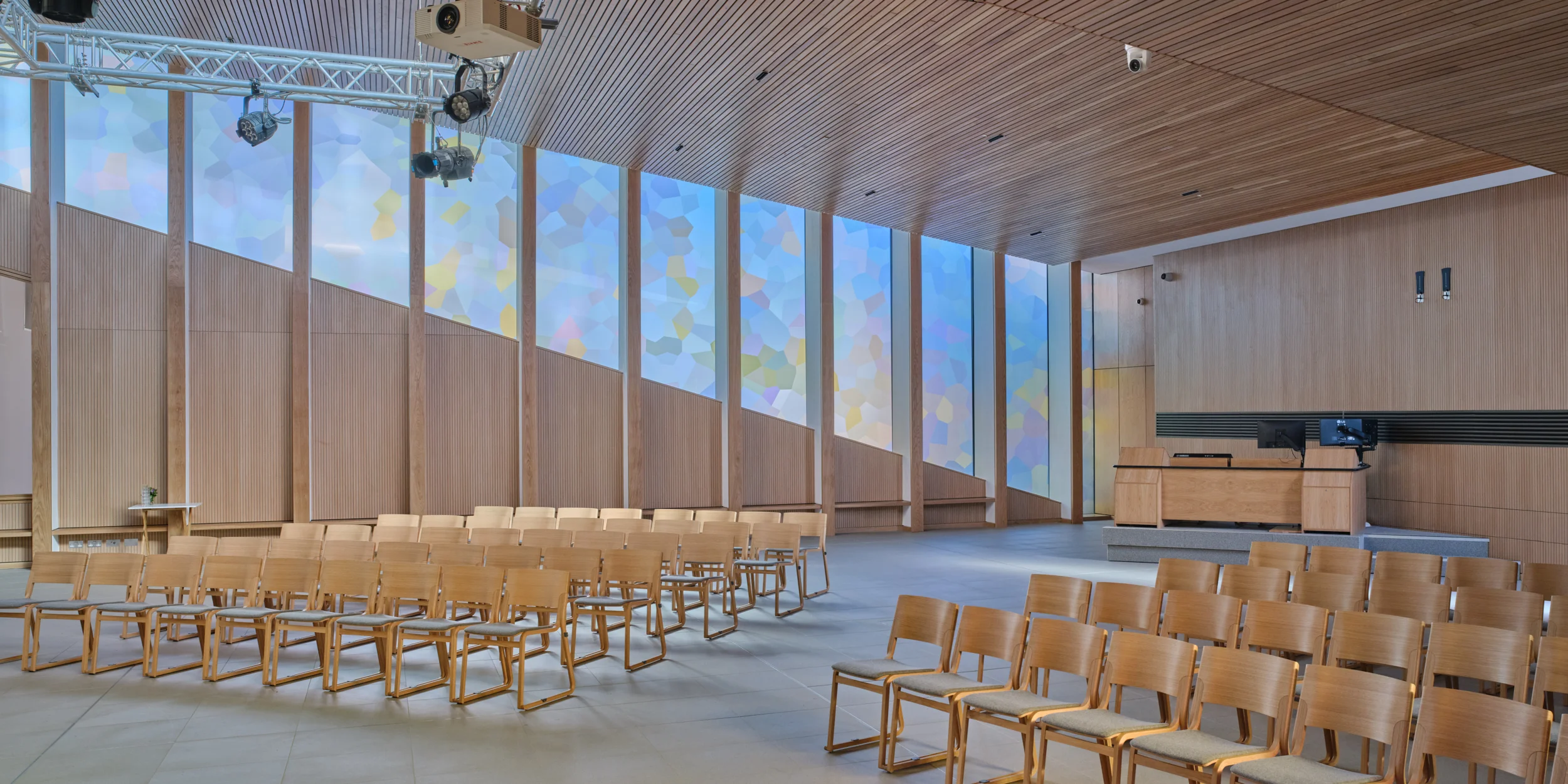
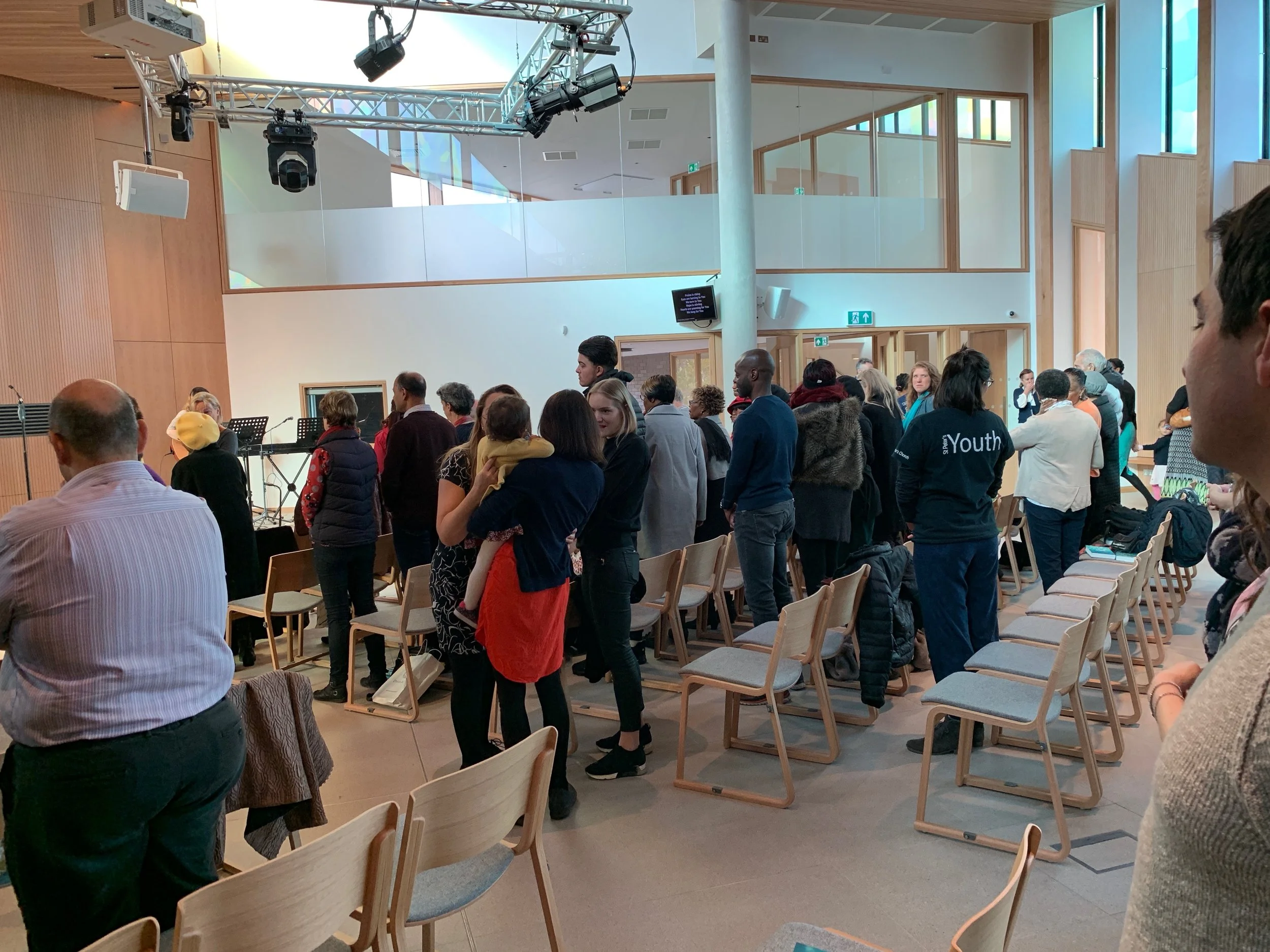
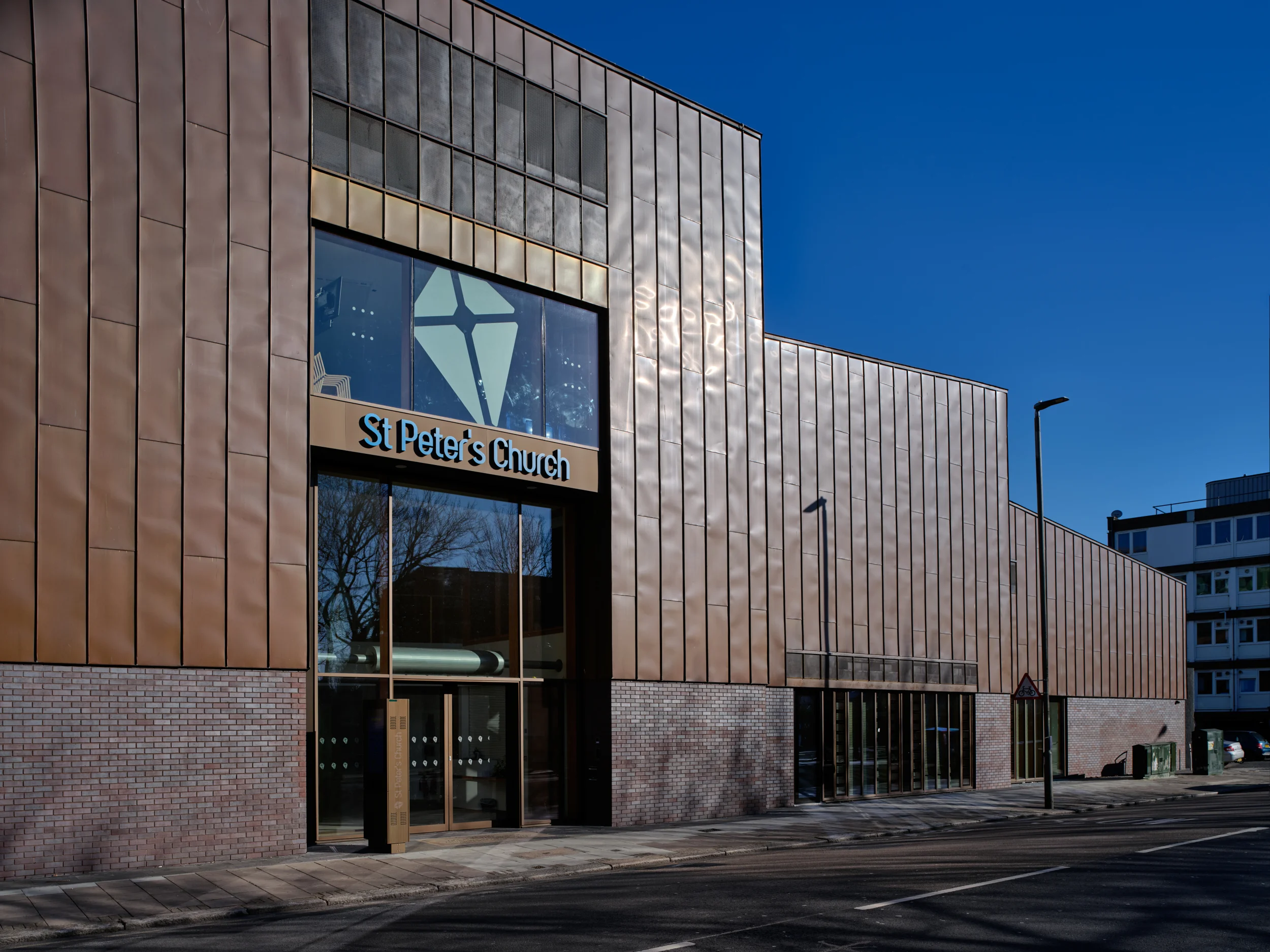
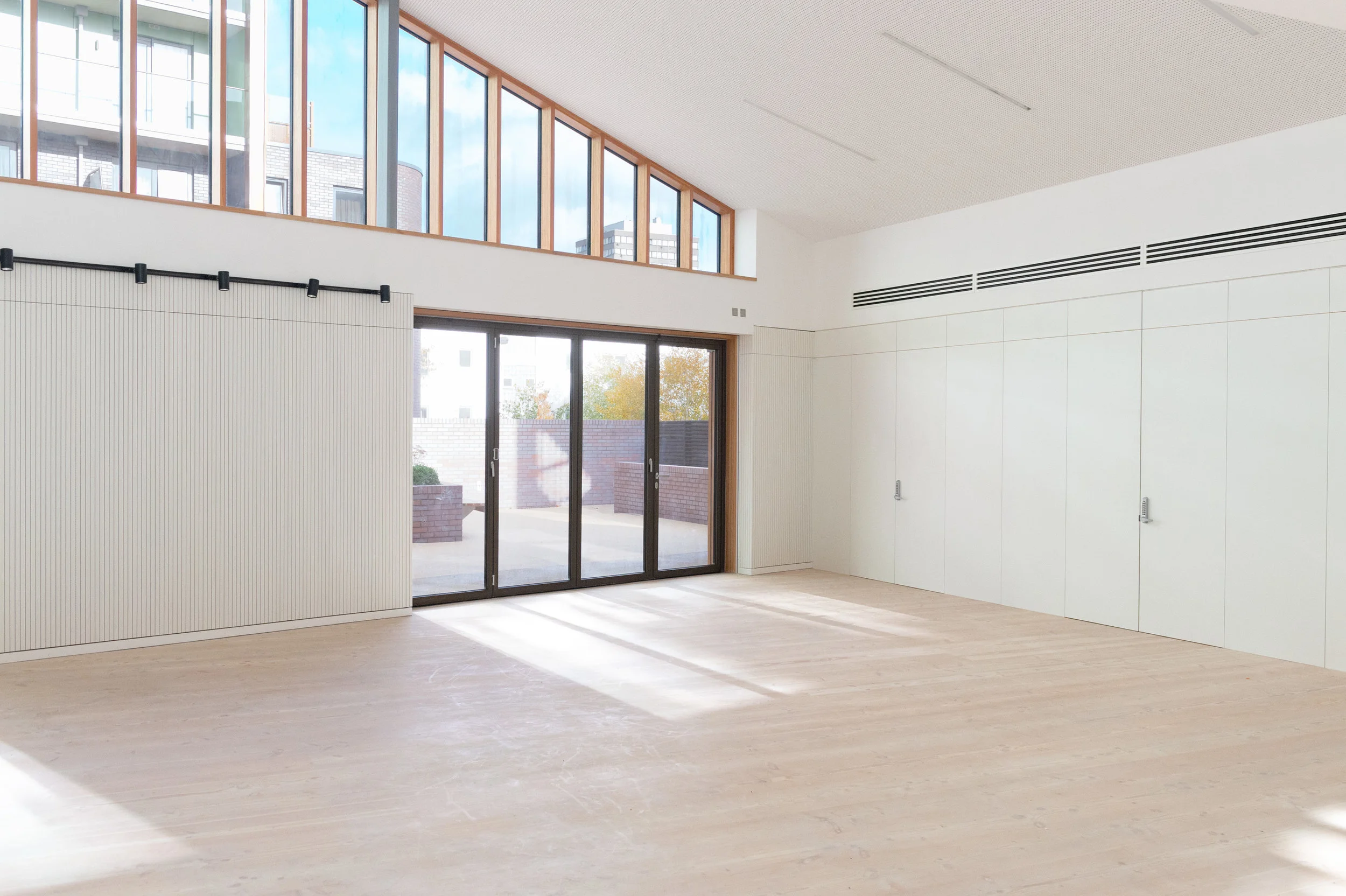
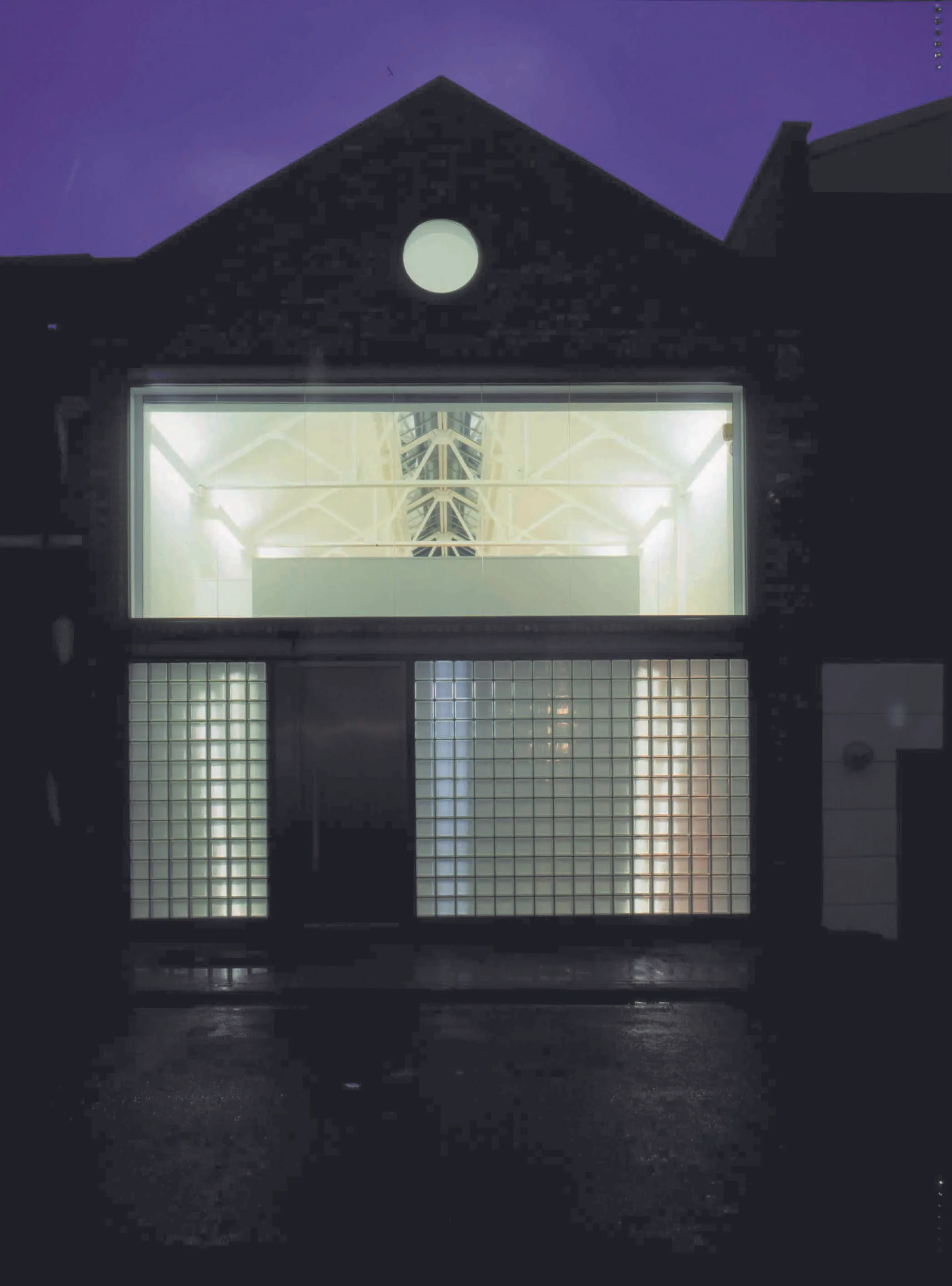
The brief for the church was to create a worship space for up to 300 people with a separate community centre for functions and seating for up to 120 people. The worship space was placed at first floor level to take advantage of higher ceilings whilst administrative of offices and seminar rooms were located on the ground floor.
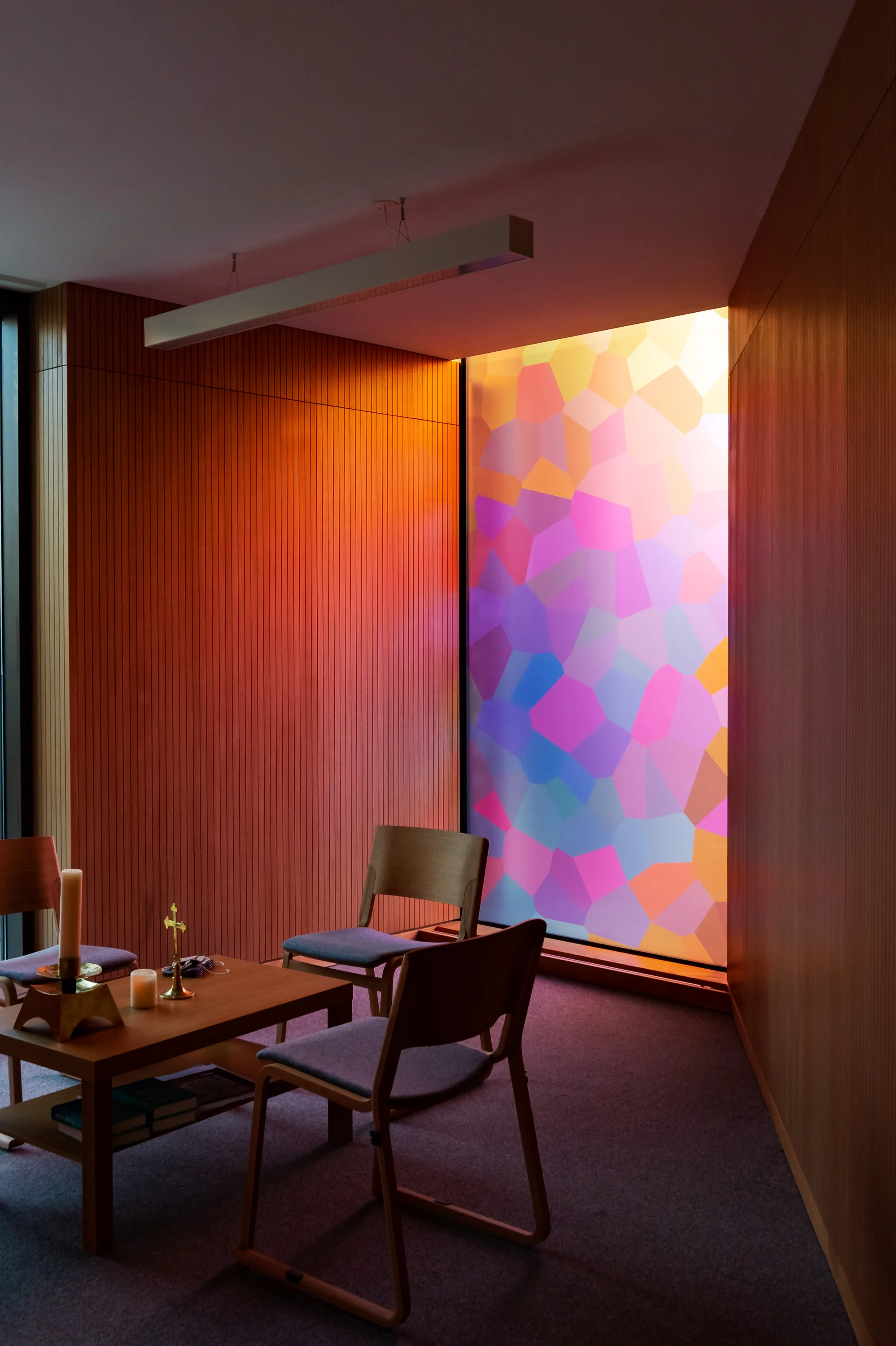
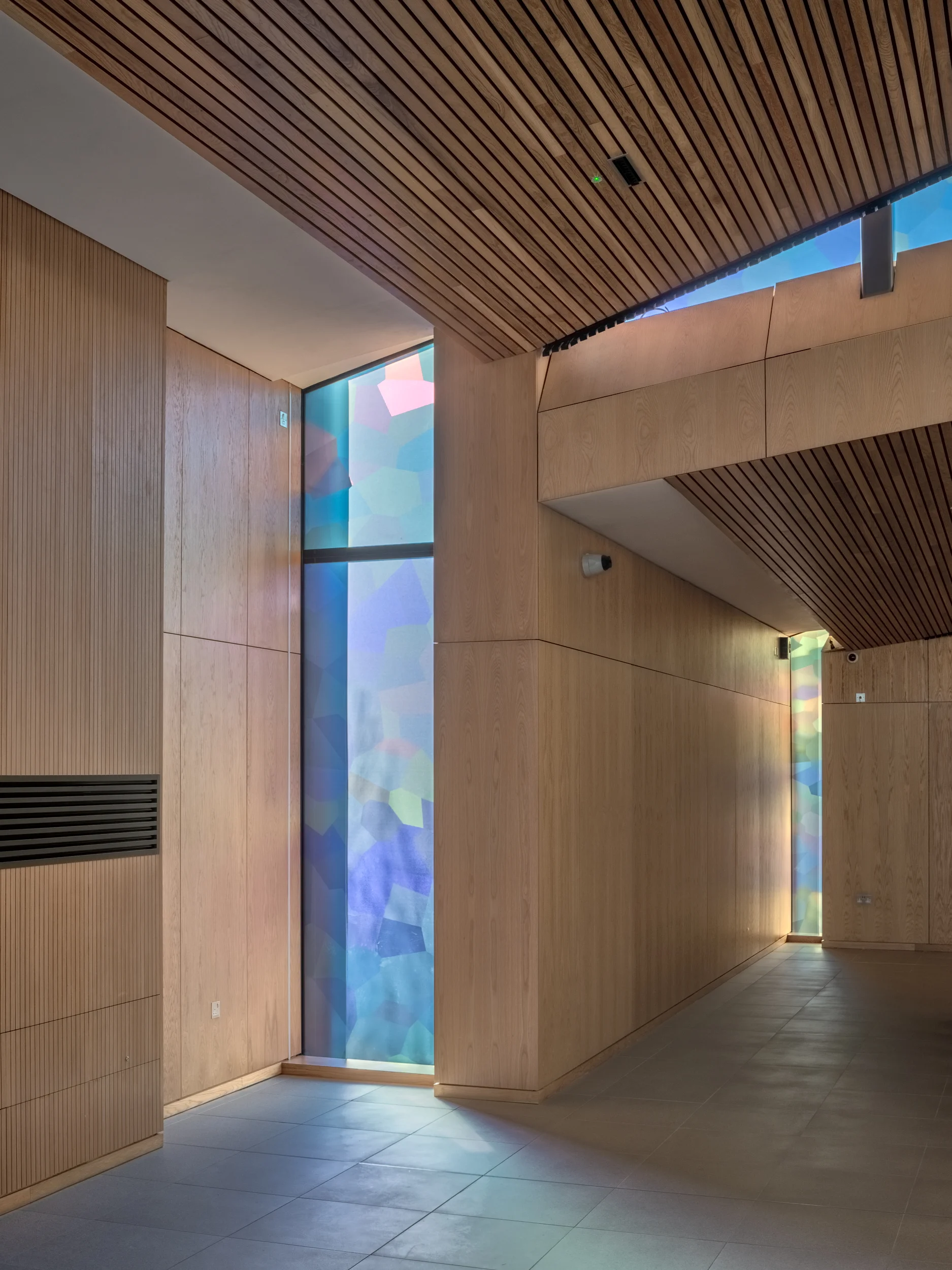
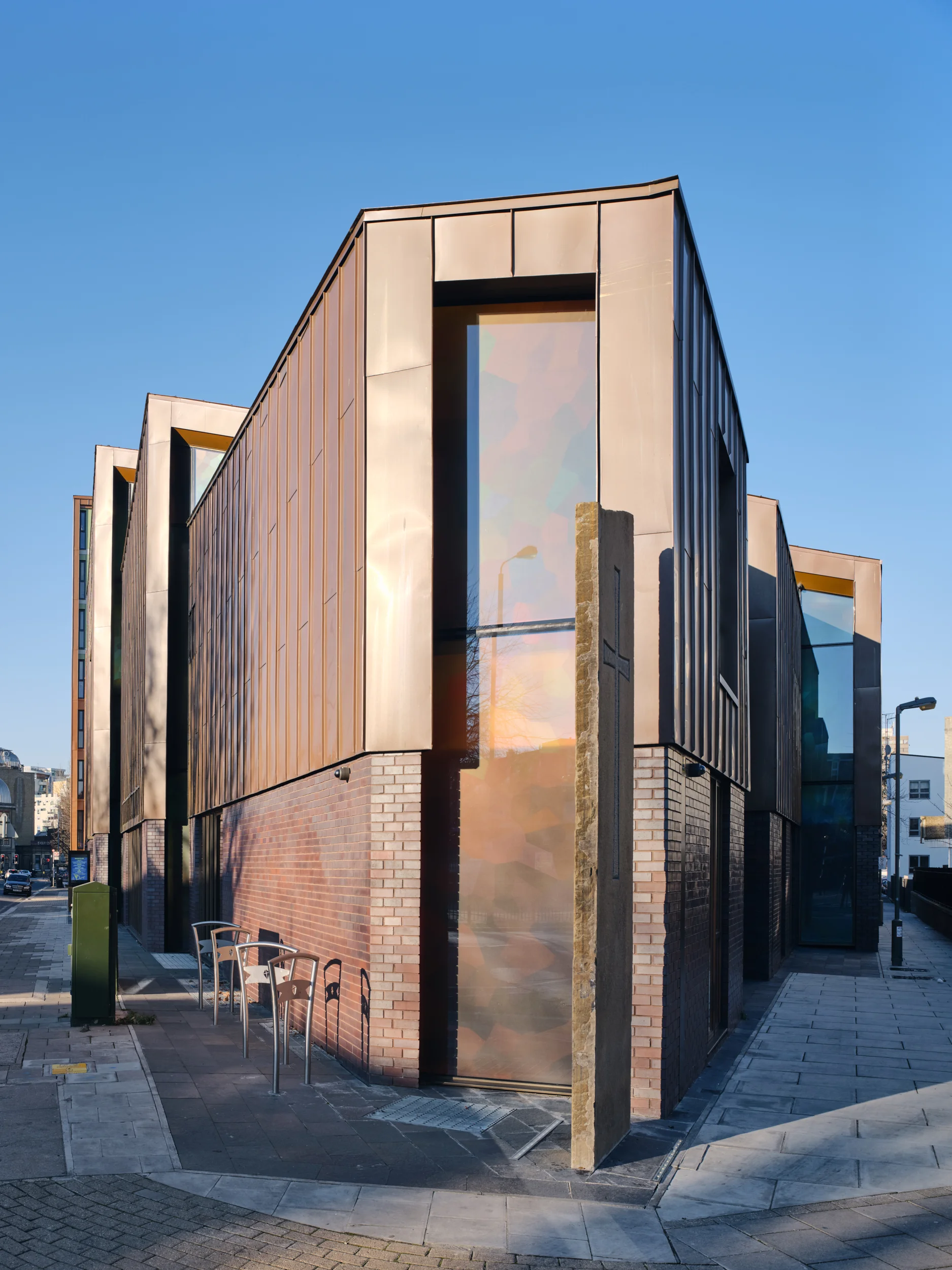
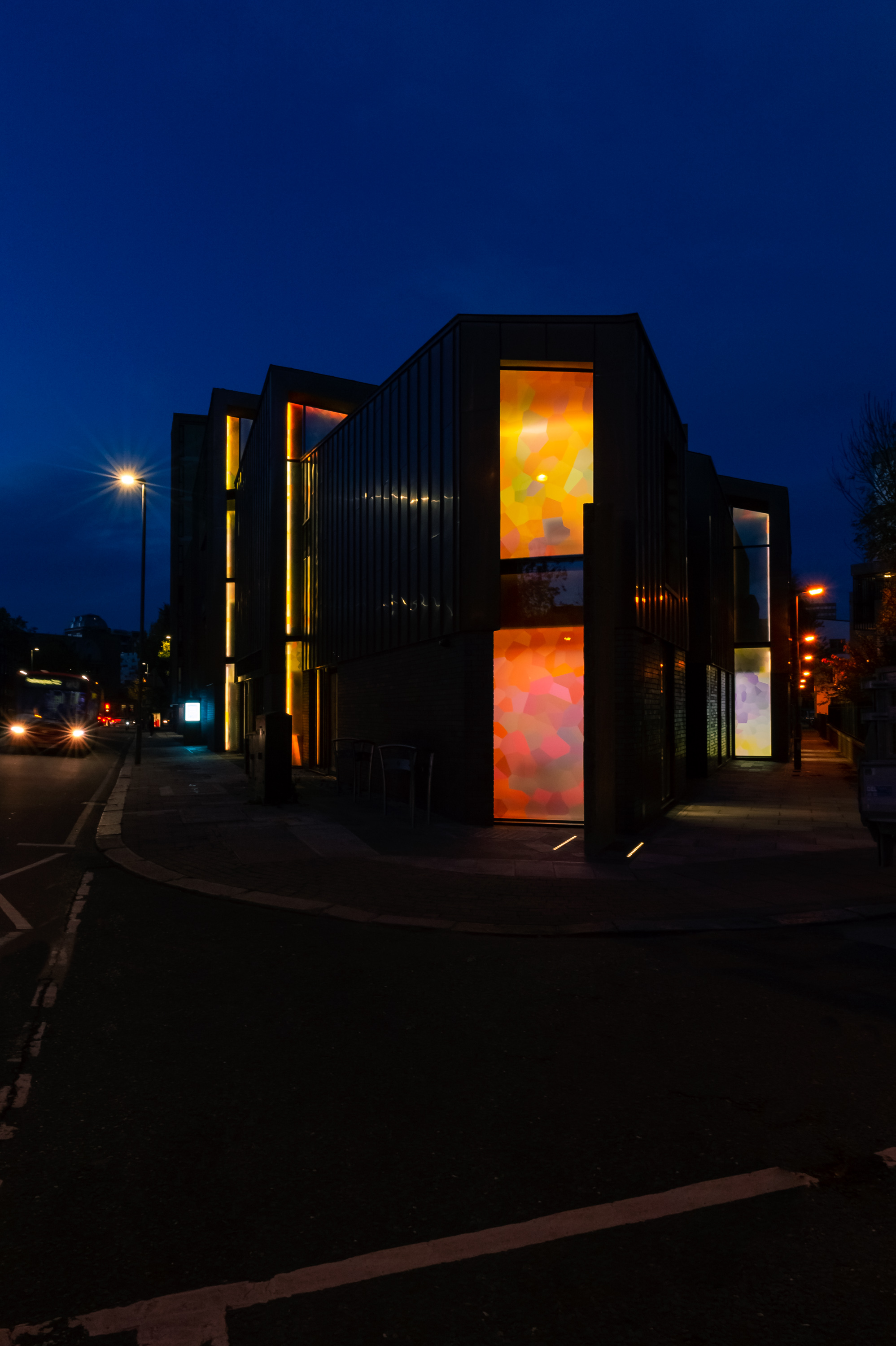
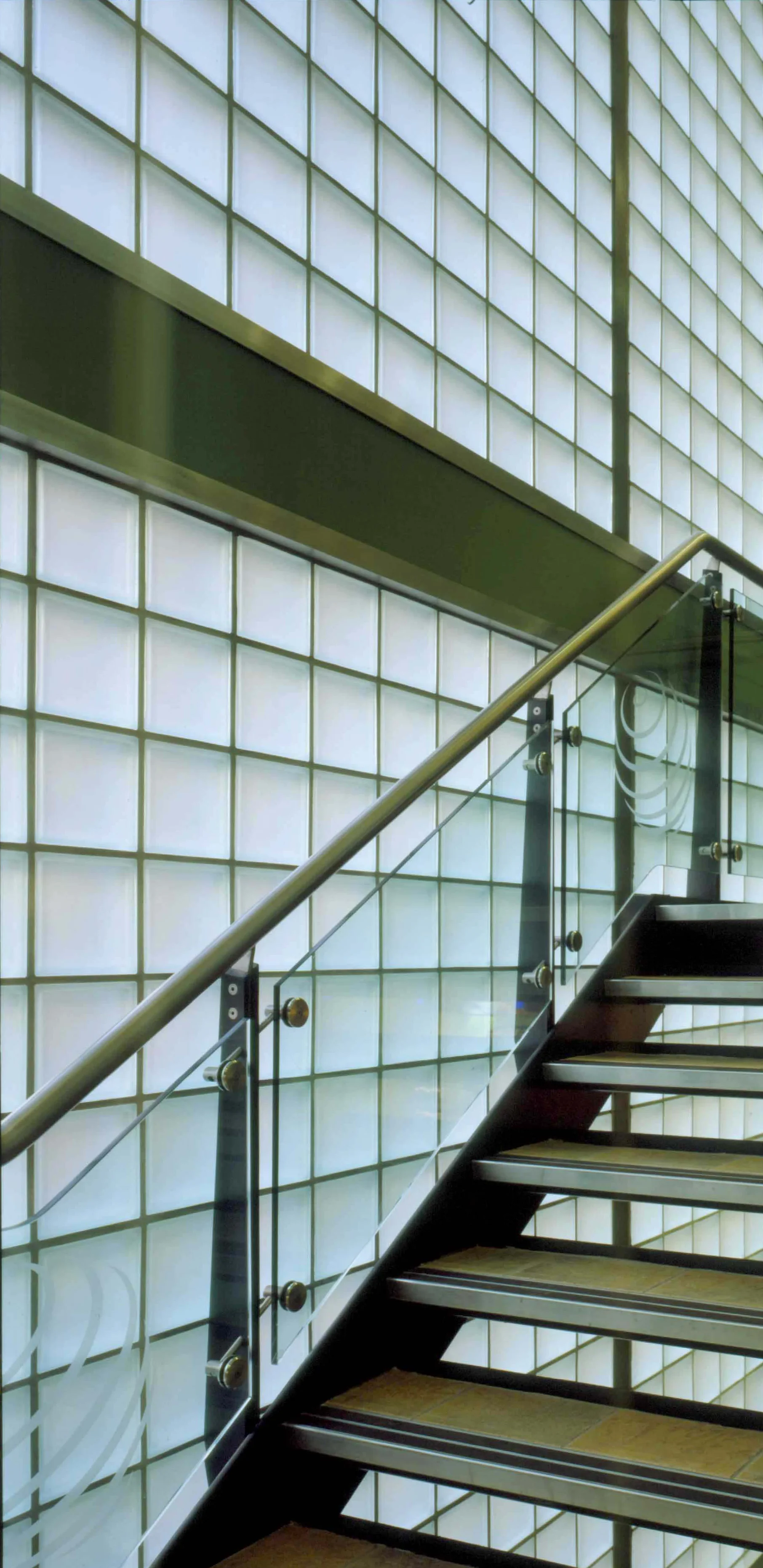
The planar glazed links gave the opportunity to introduce coloured glass into the worship space. Drawing on the tradition of stained glass in a medieval church, the design by Ptolemy Mann is an abstraction of fish scales that evolved into the symbolism of the Pentecost. The warmer colours at the southern end of the building represent re, a Christian symbol of the flames in which the Holy Spirit came to earth. The cooler colours as the building recede represent water, linking St. Peter the fisherman to the building.
The theme of St. Peter is picked up again in the Richard Kindersley wrought iron gates to the courtyard. The design incorporates the symbolism of St. Peter the fisherman and the keeper of cross keys of the kingdom of heaven.
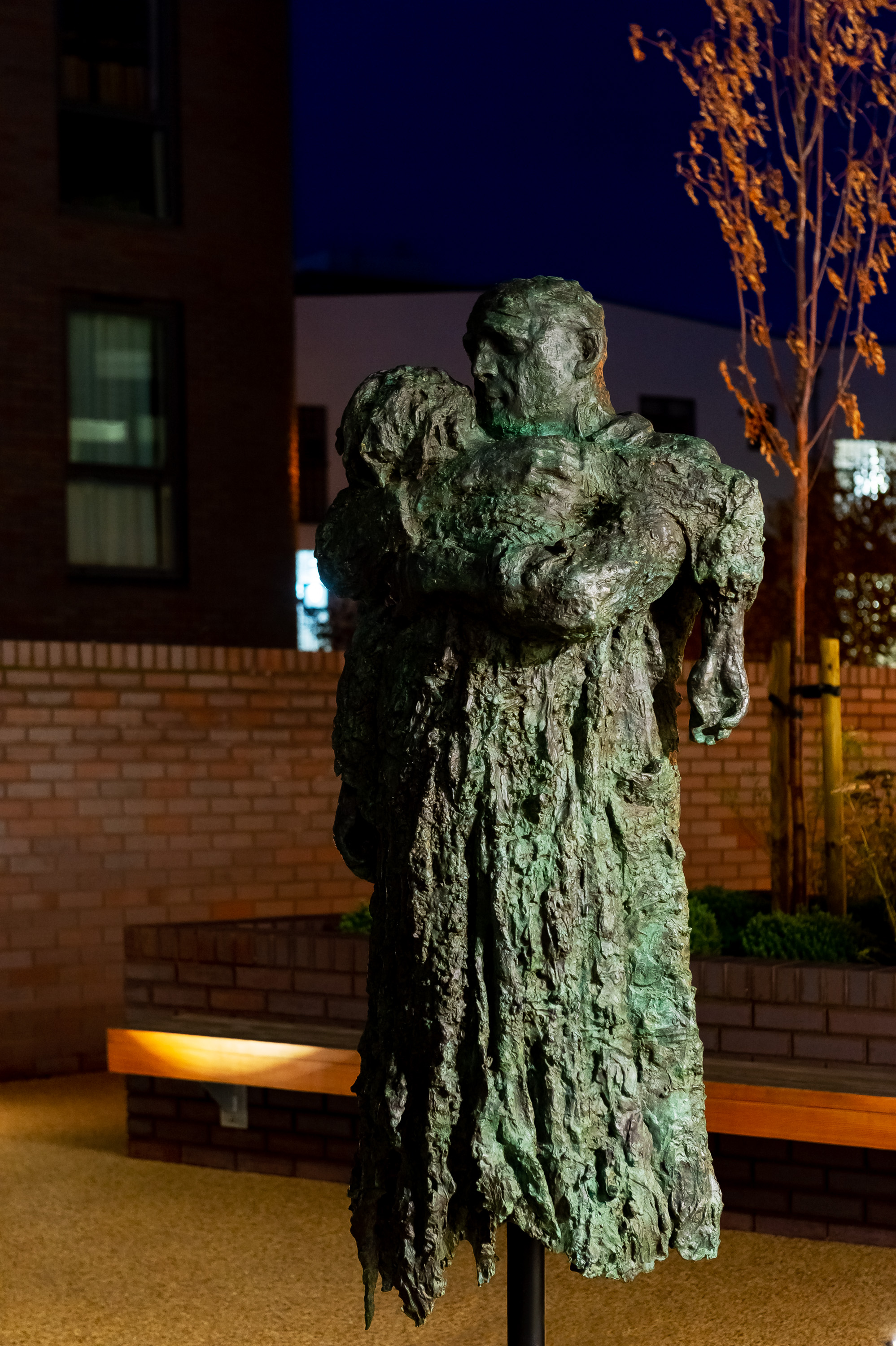
The bronze of The Return of The Prodigal Son by Charlie Mackesy can be seen in the courtyard.
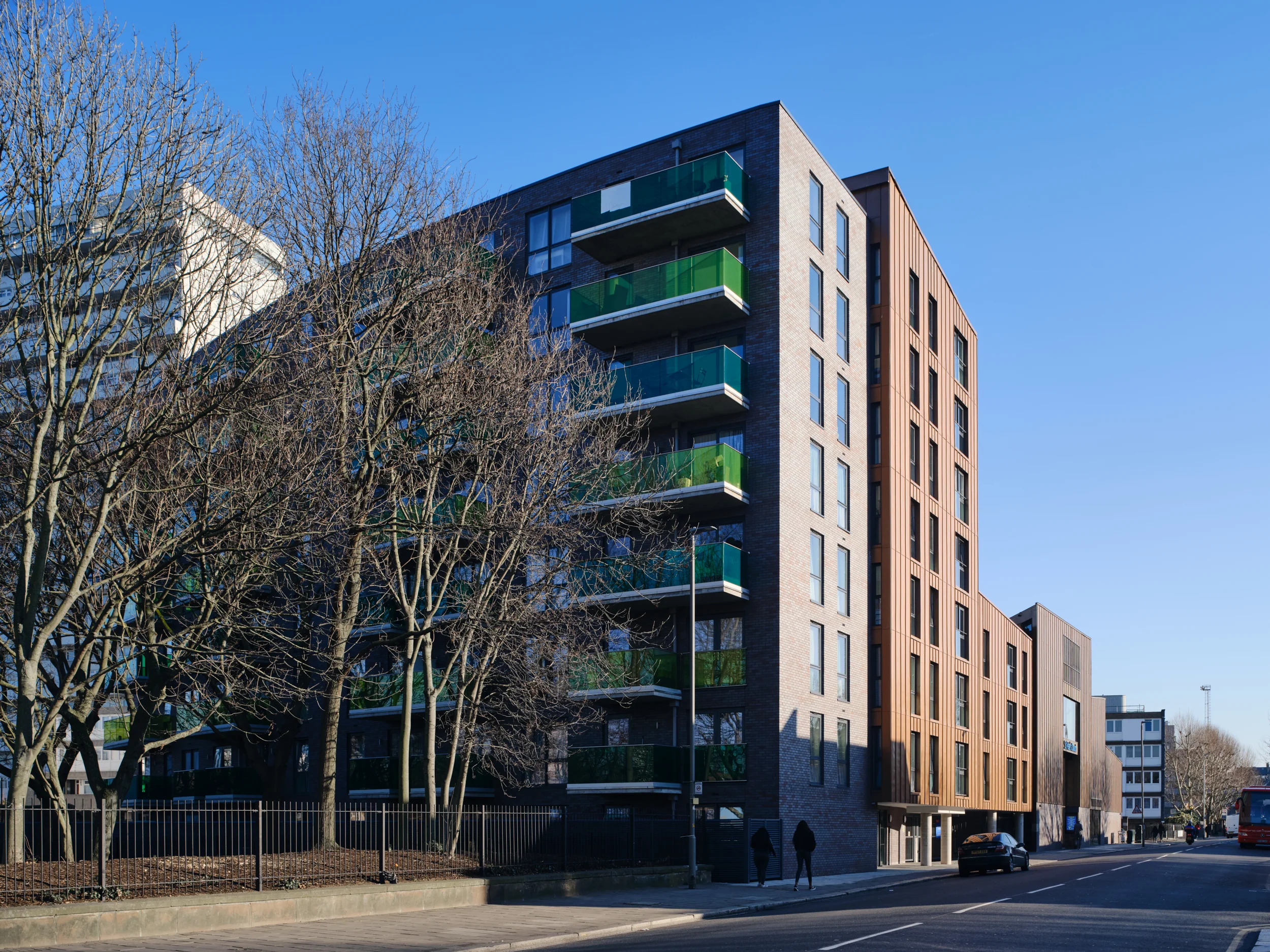
To support the cost of the new church facility an eight storey residential block on the northern site boundary overlooking York Gardens; was designed. The scheme for 69 new flats included affordable, shared equity and private sale ats and a new vicarage. The design incorporates a landscaped courtyard providing a pedestrian route linking the Winstanley Estate to Plough Road.
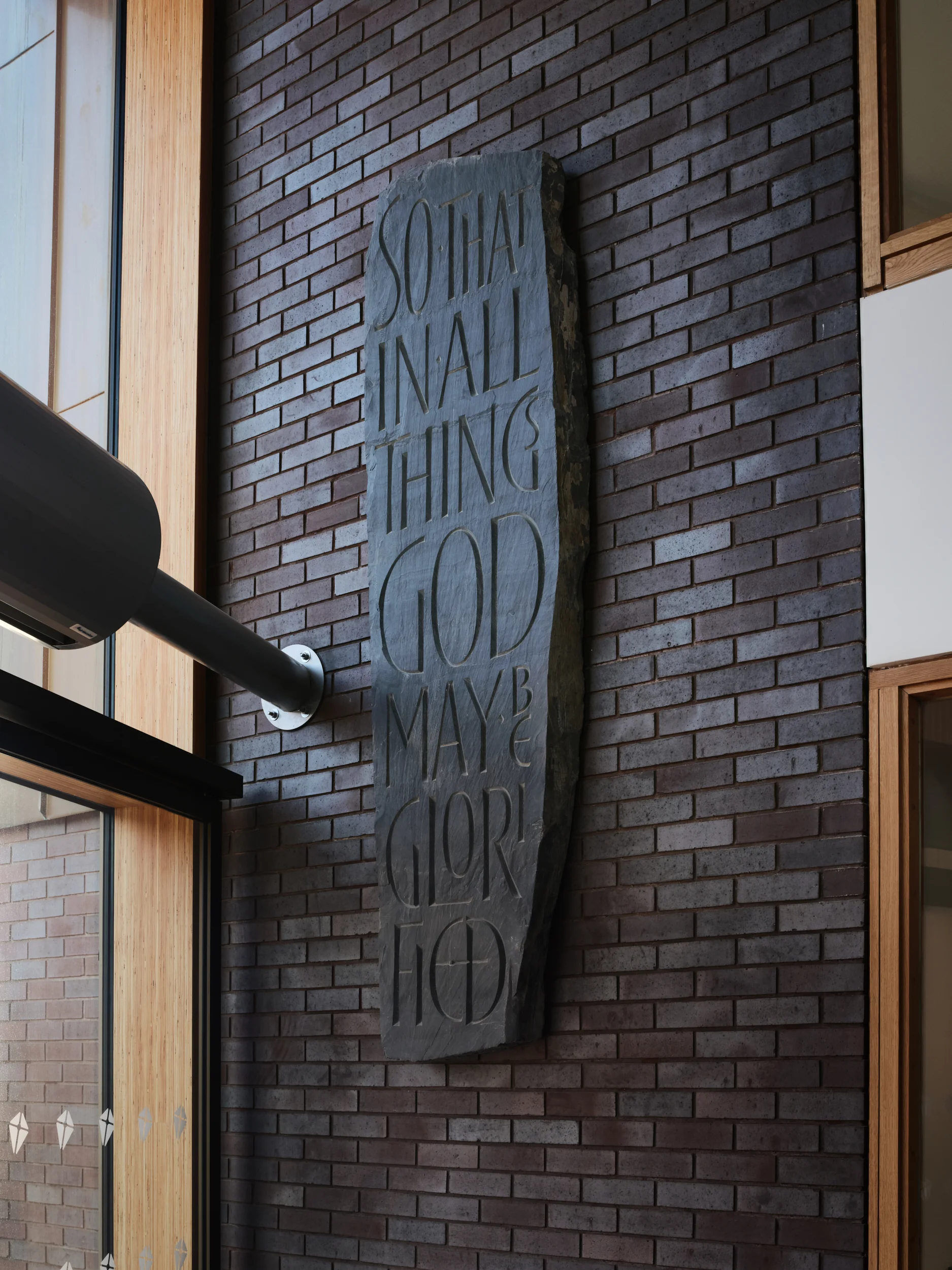
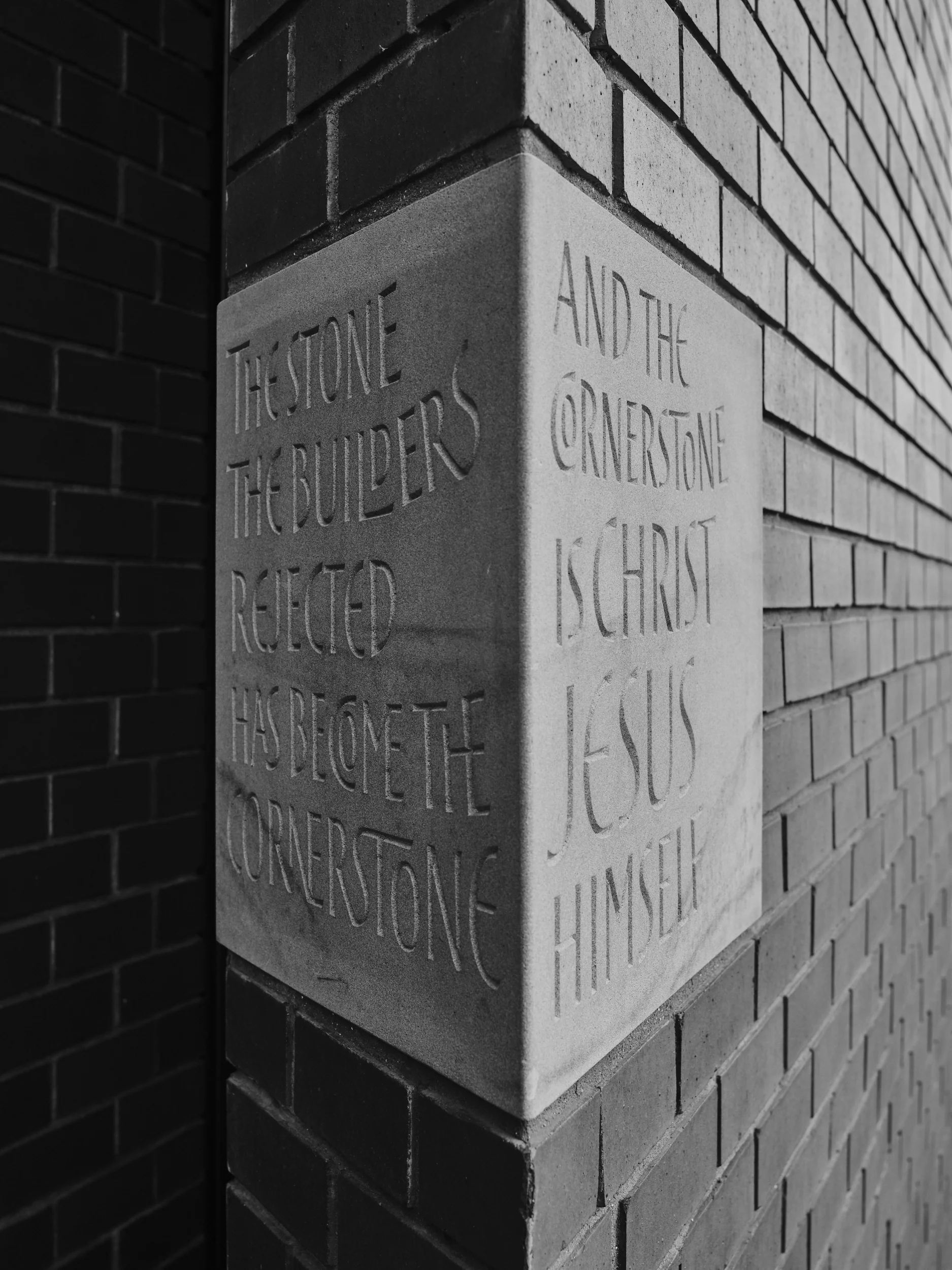
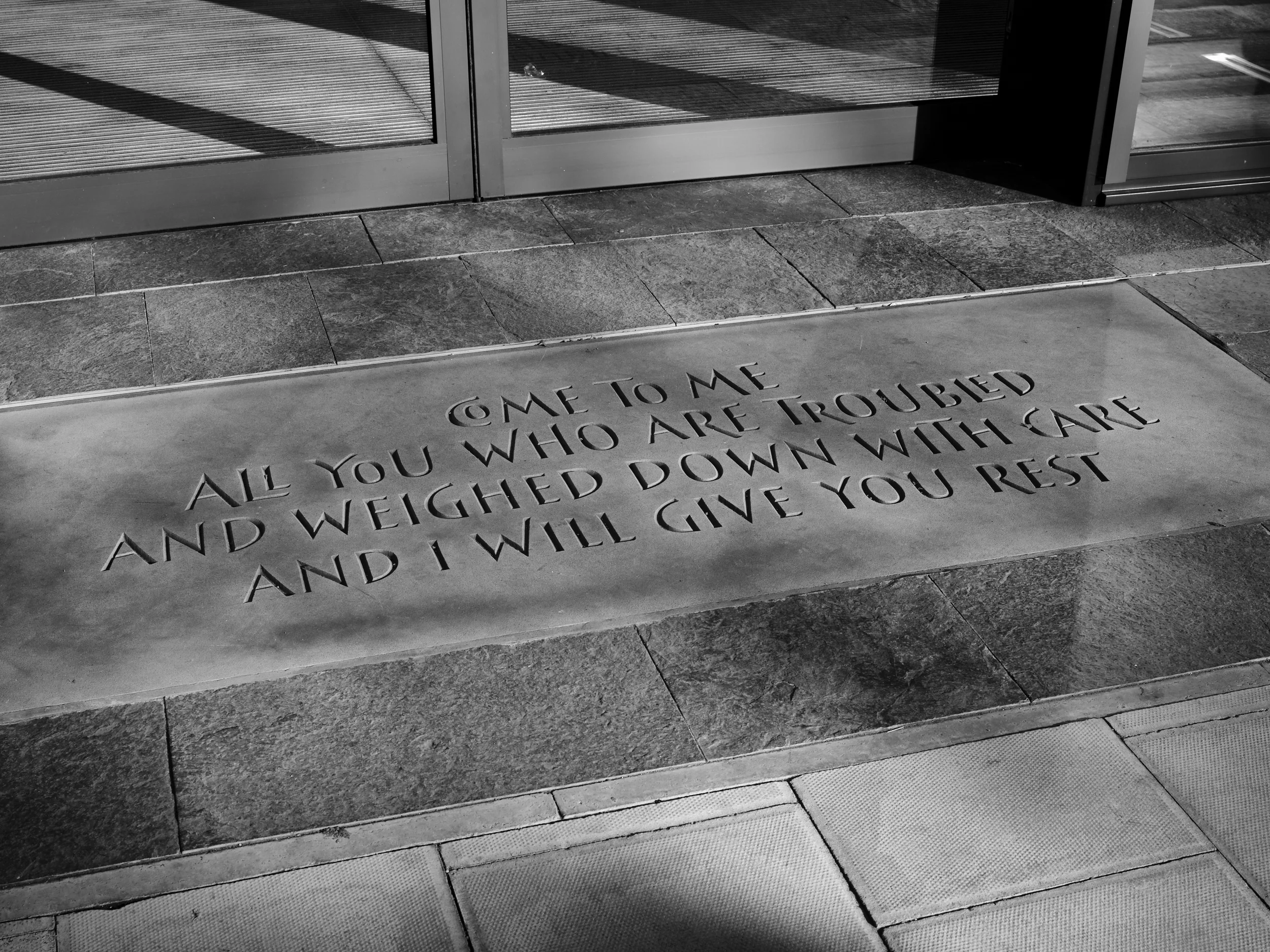
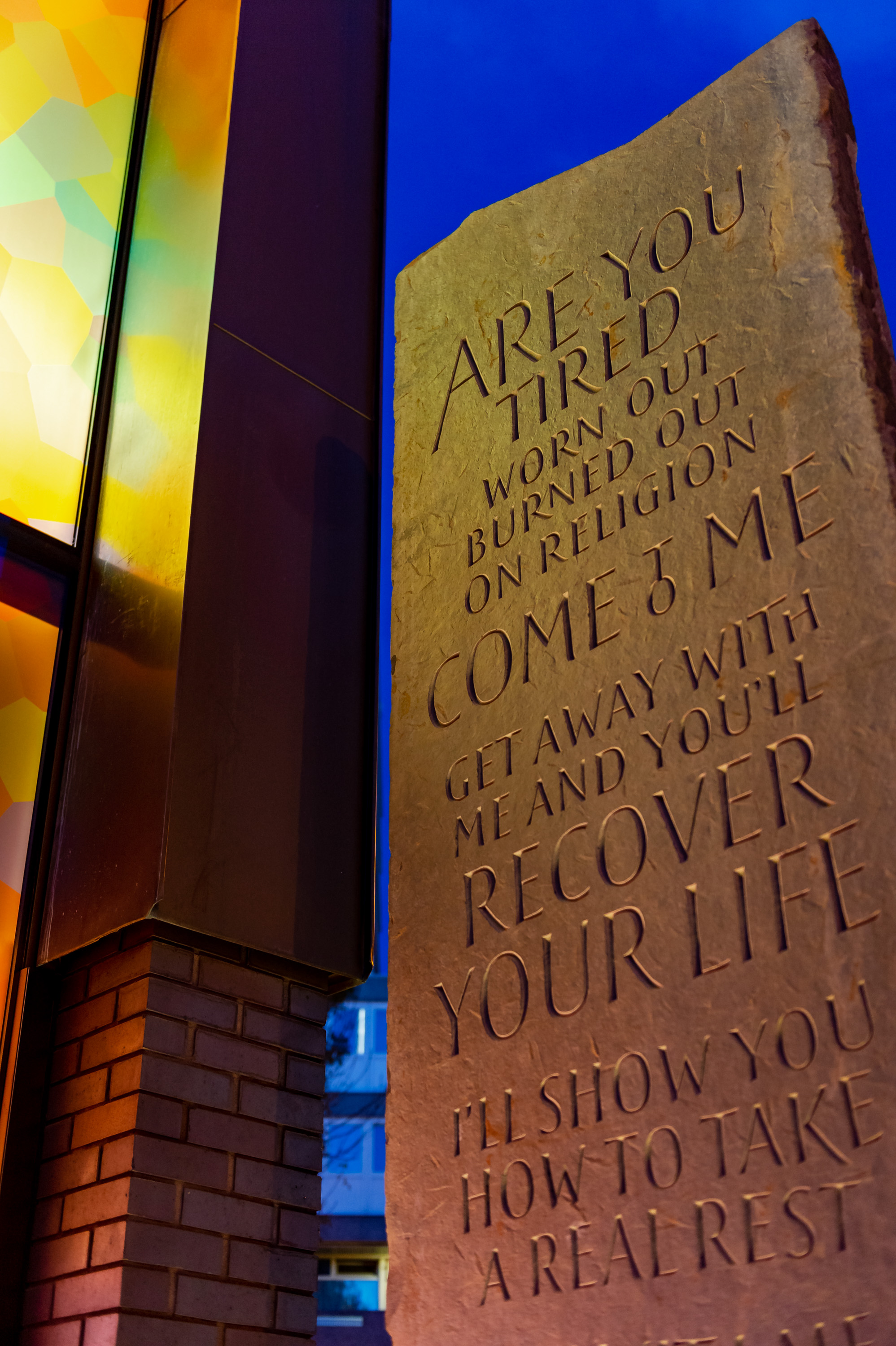
The project enabled collaboration with architects and artists whose work has been integrated into the building. Richard Kindersley produced the stone carvings inside and out of the building and the wrought iron gates to the courtyard. Ptolemy Mann designed the digitally printed glass, based on an abstraction of fish scales, while Charlie Mackesy produced the courtyard bronze of the Prodigal Son’s return.
Architects: Portal Architecture with Greenhill Jenner Partnership
Structural Engineers: Price & Myers
M&E: Environmental Engineering Partnership
Quantity Surveyors: Synergy
Lighting Design: Sutton Vane
Coloured Glass Design: Ptolemy Mann
Wrought Iron Gates, Standing Stone Monolith & Stone Carving: Richard Kindersley Studio
Bronze Sculpture: Charlie Mackesy
Developer: Thornsett plc
Main Contractor: Richardson (Nyewood) Ltd
Architectural Team: John Jenner, Howard Allen, Ian Munton, Michael Davey,
Photography: WilliamBeck,
Ruth Ward,
DomePhotographyDotCom